≡ Menu

Your Escape Blueprint

Impressions of San Ignacio

 San Ignacio, Cayo District, Belize

San Ignacio, also known as Cayo is a main hub in Belize. Together San Ignacio with its sister town Santa Elena–on the other side of the Macal river–forms Belize’s second largest urban area. The Western Highway runs right through San Ignacio. This two-lane road connects Belize City to Guatemala, which is just 9 miles away from San Ignacio.

Some of the narrow streets are lined with wooden shiplap buildings topped with rusty tins roofs making this place look like a set out of a Western movie, others are lined cheek to jowl with concrete structures, housing stores and hotels.  It is a busy vibrant town with a large open-air market acting as a magnet for buyers and vendors alike.

Community

There is a combined population of about 20,000 living here. Like much of Belize, the population is very diverse, consisting of Mestizo, Kriol, Lebanese, Mopan, Chinese and some Mennonite’s in the outlying areas. San Ignacio’s residents are laid back, friendly, and very, very welcoming.

There are many expats here with the majority living in the outskirts of town and the surrounding small villages and communities.

Infrastructure

San Ignacio is a major hub, meaning that banks, doctors, dentists and shopping are all here, there is even a delightful bakery steps away from the open-air market.

Activities

There is a plethora of hotels and restaurants as tourism is a major business here.  Those looking to connect and volunteer may want to consider the San Ignacio Humane Society or Habitat Belize (Habitatbelize@gmail.com)

Beerenomics (prices in US$)

  • A local beer in a restaurant is about $2
  • Restaurant meals $3 to $12
  • 1 kg Boneless chicken breasts $6.50
  • Dozen Eggs $2
  • 1 kg Tomatoes $1
  • 1 kg Papaya $1

Current Property Prices (October 2013)

  1. Small Italian restaurant in town $35,000
  2. Furnished gated home on outskirts of town 3 bed 2 bath $119,000
  3. Hilltop house, two miles from town centre, 6 bed, 2 bath $299,000
  4. House with acreage, 2 miles from San Ignacio in Cristo Rey, 2 bed, 2 bath $175,000

Rentals

Rents vary considerably dependant on area, size, furnished or unfurnished and the length of time, this site is a good starting point.

What’s to love?

San Ignacio and the surrounding area, enjoy unsurpassed beauty, acres of unspoiled jungle, rivers, streams, farms and a very diverse and tolerant mix of ethnicities. The people are what make this country so welcoming, especially if you are eager to jump in and make friends.

What’s not to love?

San Ignacio itself is a very busy place, with lots of traffic and activity, especially around the town centre, which can get rather noisy.

Although English is the official language of Belize, knowing at least some Spanish will be very helpful here as not all of the residents speak English.

Our Perfect Abode Checklist Comparison

  •  A stable government and economy        √
  •  Affordable properties with foreseeable appreciation   √
  •  Sunny and warm climate   √
  •  Friendly locals   √
  •  Ease of obtaining residency or buying property   √
  •  Affordability, total living costs have to be less than $2000 per month   ?
  •  A home with a view, either mountain, lake or ocean   ?
  •  Close enough to the ocean to fulfill our SCUBA urges    X
  •  Prefer a  small village or town rather than a big city     ?
  •  Readily available fresh produce and/or room to grow our own   √
  •  Some expats nearby, especially in a non-English speaking country    √
  •  A vibrant community spirit that we could be involved with    ?

San Ignacio and Belize, score high on our checklist, however we are not convinced it is right for us.

How would this list compare to your own?

Note: We spent only two weeks here in December 2012, as always we recommend spending a minimum of a month, in anyone place. Unless you have already decided that, it is not for you.

Useful contacts, links

Expat exchange site


0 comments

Less hormones please!

Ladies (and the men in said ladies lives) if you are one of those unfortunate enough to be suffering from hot flashes, power surges, or your own personal sauna affects, you may want to reconsider your diet.

Before we left on our adventures I had run the gamut of treatments for those inconvenient—hot, sweaty, flushed–moments that always happened just when you needed them least.  My memories of being a sweaty, beetroot red speaker at a convention still haunt me, it was not nerves… it was my hormones.  Nighttime flashes meant many a disturbed night for both of us.

Like many women, I resorted to H.R.T. to fend off the symptoms, only to experience the unwanted effects of being on hormones. From there I went to a naturopath, several hundred dollars and tests later, I had a plethora of prescribed supplements to boost my thyroid & adrenal systems to help compensate for the lack of properly working ovaries.

My naturopath also recommended eliminating non-organic meats and dairy from my diet due to the high levels of hormones found in them. This was not so easy to do, finding organic in North America is not always easy and the higher costs can be crippling, as was the cost of all those supplements.

Eighteen months into our global explorations—the majority of it in Central America—and during our second pit stop in Canada, I started having hot flashes again. It was quite a shock, as I had not experienced one for over a year. I had hoped that I was done with them, not yet it seems.

The question is why am I having them now, after so long without? I have not become a vegetarian or eaten only organic food, what is the factor at work here? I am sure that there are many factors in play and I am by no means an expert, however there does seem to be one obvious answer.

Meat!  It seems North America uses lots of hormones in its livestock rearing. Hormones mean faster growth, more meat, higher production and in my case, hot flashes!

Seems that the lesser developed countries of the world manage to produce excellent inexpensive, chicken, pork and eggs without added hormones. Maybe it is time to go back to a simpler way of life.

Not only does retirement overseas, offer lowered stress levels, it seems to offer a chance to eat as our grandparents or great grandparents did.  Free-range eggs, hormone free meat and abundant fresh vegetables are found throughout Central America and we hope South America too. We will keep you posted.

IMG_0373


0 comments

Break free, loose the “stuff”!

How many things I can do without!” ~ Socrates (on looking at a multitude of wares for sale)


Take a good look! Scary isn't it?

Take a good look! Scary isn’t it?


I am not sure how much you have collected, I do know that after 11 years we had a substantial collection. Is a punch bowl, stacks of wicker baskets and 3 overflowing bookcases needed? No, it is time for them to go along with all the other stuff!

If you have decided that it is time to break free, you have to decide whether to store your belongings or say goodbye to them. After hearing tales of friends paying storage fees for three years and then realizing that they did not want to keep any of what they now considered junk, we decided it all had to go.

Craigs list, Is a great resource, it is free and simple to use. We sold an amazing amount of goods and developed a few tips and techniques, for the best results try the following.

Use attention getting headlines and do not forget to include what benefits the buyer will get from having your widget.

Use a good quality photograph, you can take your own or use a photo pulled from the manufacturer’s site. While you are there check to see how much the item, sells for at retail cost. However realistically if you get half price you will be lucky, a third is probably more realistic. It just depends on who is looking for that item at the time.

Watch out for the scammers! Do not accept Money orders and bank drafts especially when they are long distance purchases. The draft may appear to clear your bank until they try to redeem it with the issuing bank, which doesn’t exist, you are then liable for the funds and the fraudster offers to include shipping in their payment to you, which you then pay for too! Someone tried that with me, be very cautious and take a moment to read the guidelines on the Craigs list site.

Sell clothes on assignment, especially if you have good quality classic pieces. Check your area for consignment stores and pay them a visit, to see what they sell and discuss how the process works. Some stores only take seasonal items, which mean you may be stuck with some items. The sooner you start the better as you may be able to clear more items that are seasonal. Be aware though that your dearly beloved outfits may not be so desirable by the storeowner. They know their clients and have a good idea of what will sell and what will not.

Donate to Charitable organizations, the remainder of your excess wardrobe will be gratefully accepted by any charitable organization, such as Developmental Disabilities Association, Big Brother, Salvation Army thrift stores or the local hospice. You can de-clutter and help a worthy cause at the same time.

0 comments

In Search of the Perfect Abode!

What is the perfect abode?

Luckily, the answer is not the same for everyone. After our mortality wakeup call and decision to quit the 9 to 5 we realised that we could not retire in our hometown.

As experienced travellers, we already knew where we enjoyed travelling to and what we enjoyed doing while there. This enabled us to put together our own personal wish list for the perfect abode. We knew that we wanted:

• A home with a view, either mountain, lake or ocean

• Close enough to the ocean to fulfill our SCUBA urges

• A small village or town rather than a big city

• Readily available fresh produce and/or room to grow our own

• Some expats nearby, especially in a non-English speaking country

• A vibrant community spirit that we could be involved with

This is the list we started with, it has changed and developed as have we. By traveling slow and taking advantage of housesitting and long-term rentals, we have a much clearer understanding of what we do want.

We soon realised that instead of living right on the beach, we would prefer to be a little higher maybe on a cliff overlooking the ocean. We do not enjoy big cities but do not want total isolation either. We would enjoy having a garden, maybe even chickens and Michael would be more than happy if we could manage without a vehicle. Somewhere there is the perfect abode for everyone, but where do you start?


Isla Palenque_-15

We decided that we would start with visiting and then shortlisting countries that fill another list of criteria.

• A stable government and economy

• Affordable properties with foreseeable appreciation

• Sunny and warm climate

• Friendly locals

• Ease of obtaining residency or buying property

• Affordability, total living costs have to be less than $2000 per month

If a country ticks four of these six choices, we know we have potential. We then start thinking about our other criteria and do a little exploring with these in mind.

Our short list of possible countries and destinations is of course growing as we work towards our bucket list goal of visiting 100 countries. Our criteria are also morphing as yours may too, as you realise that you don’t like big cities or windswept headlands.

By the time we are ready to settle down—or should I say if—we will have a very good idea of what we are looking for and where to go. If you are wondering where to start here are a few tips and ideas.

Spend time with your partner discussing what each of you envisages as your perfect abode and your perfect lifestyle. Be creative, just as in a brainstorming session let the ideas flow freely and uncensored. Write them all down and prioritize them, hopefully you match in at least a few areas. If not well, you may end up being one of the many couples who end up with two homes in completely different locations.

P1180924

You then have to decide what you want, what is important to you and how flexible do you want to be? A good starting point would be to ask a few questions, such as:

• Are you willing to learn a new language? If the answer is yes, you have a lot more choices, if no then consider English-speaking countries such as Belize or Ireland or places with large expat populations.

• What climate do you want?

• Are there medical concerns? If so, do your research and consider only those countries with good healthcare in place.

• How often will you fly home to visit? If you plan on regular visits, flight costs could be a major factor.

• Do you dream of beaches or mountains, tiny quaint villages or bustling cities?

• How much infrastructure do you need? Do you have to have internet, paved roads & malls?

Once you have your wish list, do your research and develop a short list of suitable countries. Remember that many countries have coastal and mountain areas, generating a wide range of climates. Panama is a prime example with mountain fresh Boquete versus hot and humid Panama City.

Now you have your short list do as we do, go and visit, see and explore as much as you can. If you have already drilled down to a specific area, plan a visit for as long as possible. While there.

• Rent an apartment or house

• Shop at the local markets

• Explore the neighbourhood on foot or bicycle

• Say hello to the neighbours

• Search out local expats and pick their brains

• Find out if there is volunteer or community activities that interest you

• Talk to realtors

• Pretend you live there.

Then ask yourself how you feel. Do you feel safe and comfortable, do you like the area, the food, and the people, have you made any friends? Is there anything that you do not like or something that is a major irritant to you?

We weigh all the pros and cons, but ultimately it is how we feel that weighs our decision as to whether this could be the place for our ideal abode.

We look forward to hearing about your perfect abode.

City in the sea peniscola spain


0 comments

Warning – Bad News!

“Oh my god, you are going to travel in Central America isn’t that rather dangerous? Aren’t you afraid for your safety?”  This was the most common response when we told friends and family of our plans to spend a year travelling in Central America.

 It is not that any of them had any personal experience in the region – for the most part their fears were based on what they had heard in the media.

TV should come with a warning label especially when it comes to broadcast news…………

 Warning:

 The Surgeon General has determined that watching broadcast news is dangerous to your psychological well-being.

 Watching TV can distort your view of reality and cause negative moods such as anxiety, depression, anger and disgust (especially when watching political coverage).

 Excessive amounts of TV news can seriously distort your view of the world and the people who live on it.

 Use with Caution!

Our reality was after travelling in Central America for almost a year, we never once felt threatened or endangered. We did our homework before travelling, researching specific countries we were travelling to on government websites and better yet talking to people on the ground.

You have to admit with over 7 Billion humans roaming the face of the earth a whole lotta bad stuff is going to happen such as terrorist activity, crime, war, famine, violence, political unrest etc etc….

The problem as I see it, is that news broadcasting appears to be more about “horror movie” style entertainment than impartially reporting what is happening in the world. The news has to compete with everything else that bombards us on a day-to-day basis. Apparently war, chaos and mayhem sells better than the positive things happening in the world.

Another reason not to consume too much of this diet, is that like extra calories, it stays around.  Some people’s impression of a country is based on sensational news they consumed 20 years ago

Yes, there was civil war in Nicaragua 30 years ago!

Yes, Panama was run by a self-serving dictatorship from 1968 to 1989.

Today, these countries are very safe to travel in. In fact, they are rolling out the red carpet for investors (do your homework!) and retirees from other countries. Nevertheless, for some reason the news of 20 years ago still lingers in many people’s minds.

One of the most enjoyable aspects about my first extended period of travel in 1995 was going on a media fast. After only a few weeks of being unplugged from media scaremongering, I found I was much happier actually experiencing the world!

Although unplugged from the media myself, when something important or significant happened, details would be  passed onto me by fellow travellers.  During this year of travel, I was informed of the following major events:

  • More than 5,000 dead in Japanese earthquake
  • Criminal trial of O. J. Simpson opens in California
  • Nerve gas attack in Tokyo subway kills eight and injures thousands.
  • Scores killed as terrorist’s car bomb blows up block-long Oklahoma City federal building
  • Death toll 2,000 in Rwanda massacre
  • Fighting escalates in Bosnia and Croatia
  • U.S. shuttle docks with Russian space station
  • France explodes nuclear device in Pacific; wide protests ensue
  • Los Angeles jury finds O. J. Simpson not guilty of murder charges
  • Quebec narrowly rejects independence from Canada

Did any of these events affect my life directly? Not really.

Was I able, personally, to do anything about these events? No.

Then why would I need to be bombarded by a constant chant of “the sky is falling” hype?

It has been said that no thought or information lives in your head rent-free. The cost of consuming broadcast news is the negative way you feel about the world around you and eventually yourself.

It is up to each individual to carefully choose the information that resides in their head to and to take responsibility for the quality of life they live. The trick is to be aware of the real information not the sensationalized emotionally charged “news”

After visiting over 50 countries, many of them in the third world, I can honestly say “the world is not as scary as the media would have us believe”!

Happy Trails


Isla Palenque_-19
2 comments

How to show a girl a good time!

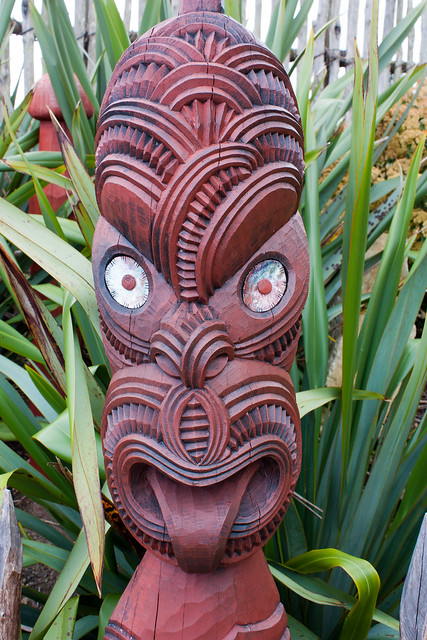
Lake Taupo, New Zealand was a small yet stunningly pretty place back in 1995. I had been travelling solo for over 2 months at that time and was pleased to meet a fellow Brit at the hostel. Being the friendly gals we were, Jess and I announced that we were going to the pub as we passed through the common area. Upon hearing the invitation to join us we were joined by one guy, who, little did we know was in for quite the adventure!

We had barely had time to introduce ourselves when dark shapes peeled out of the shadows behind us. Mike was there first target, when his response to “Hey white boy give us your money” was negative, he got two punches to the face. Fight or flight responses kicked in and he took flight, running as fast as possible in flip-flops back towards the hostel.

The four males in this group of Maori teenagers took off after him, leaving Jess and myself, facing two heftily built girls. They tried the same line with us, which also received a “no”. After a brief scuffle and a few kicked shins and scrapes, I broke away and flagged down a passing car, the driver whisked me back to the hostel, Jess broke away and ran into a nearby gas station where they phoned the police.

With adrenalin, surging through your system it is amazing what you can do, just ask Mike, who managed to outrun the thugs and make it back to the hostel. The sight of his bloody face had already caused quite a commotion by the time I and Jess–in a police cruiser–made it back.

The remainder of the night we spent giving statements and describing this group of teenage thugs.  Wearing jeans and baggy T-shirts, briefly glimpsed in the dark, they could have been any group of local teens.  My first and only time in a police cruiser was the tour of the local hangouts we had, trying in vain to identify our attackers.

At midnight, delivered back to the hostel, the horrified owners pulled out the brandy—not sure, if it was to calm our nerves or theirs–it was here where we had our final interview of the night with a stress councillor. A little cranky and tired of repeating the story we gave her a condensed version. Her advice to the three of us was to “keep on talking it out”.

Over the next few days as a bloody nose, split lip, bruises and scrapes healed, we hung out by the lake, checked out the local hot springs and formed strong friendships. Jess headed back to England and Mike and I decided to travel together for a while.

After 10 months on the road, travelling though New Zealand, Australia, Singapore, Malaysia, Thailand, Sumatra and Nepal, we were still together.  Which as any backpacking couple will tell you is a major accomplishment.

Eighteen years later, we are still “talking it out”. As Mike has often joked, “he sure knows how to show a girl a good time”.

Maori carving


1 comment

Slow travel, slow down and smell the Panzanella.

What the heck is Slow Travel?

Have you ever been on a coach tour, where you have a new destination and hotel every night? Or backpacked from hostel to hostel, never staying long enough in one place to even unpack let alone do laundry? Forever on the move and bouncing from destination to destination is exhausting and eventually overwhelming.

Slow travel is the antithesis of that kind of travel, imagine instead, having the luxury to explore in depth, to really get an insight into a people and culture. Instead of merely scratching the surface, you get to see through the cultural differences and develop an understanding of different views and customs.

Having done both backpacking and coach tours, we now choose slow travel every time.

The lure of slow travel is the opportunity to connect to a place and its people, to get an in-depth experience of its true culture, not the façade presented to the typical tourist.

House sit in Tuscany

Our House sit in Tuscany

Why Slow Travel?

  • Lower cost–renting an apartment or suite, for two weeks or a month costs less than a hotel or even a hostel room.
  • Save money by cooking for yourself—not only is cooking for yourself cheaper but it is usually a lot healthier too
  • A base from which to explore— instead of lugging baggage around while visiting that must see on your way to???  leave the bag at home and enjoy day trips instead
  • Privacy and space—  having an apartment or even a small house gives you a lot more space and privacy not only from others but yourselves too (even couples often want some time to themselves)
  • Lasting Memories –often our fondest memories are not of the nearby tourist attractions but the little church or bistro near our apartment.
  • Sustainability— as we use less public transport it is a more sustainable way to travel and because we are shopping locally, we support local businesses.
  • Cultural understanding –living, shopping and exploring in the same area over a few weeks gives an insight into the community and culture available no other way
  • Relaxing—instead of returning home in need of a vacation it is a much easier way to travel, especially when travelling for extended periods

 How to Slow Travel?

Even if you don’t have months to spare you can still enjoy slow travel, renting a small cottage in Ireland with stunning ocean views, could be more fun than a nonstop tour of London and a lot more relaxing.

Decide on an area or country that is of interest to you and set your timeline, whether two weeks or two months and prepare to experience a new way of travel.

First find suitable accommodation, there are many online options for finding long and short term rentals such as Airbnb or Homeaway you may also want to consider  Housesitting or even House swapping.

Alternatively use Tripadvisor to research accommodation and book direct, or find something once you have arrived as we do. This of course works well when you are not on a tight schedule.

Once you arrive, unpack your bag, stock your own larder, explore at leisure and sample how other people live. Your schedule is your own for you to spend as you wish. Visit tourist attractions because you want to, not because you have to.

Bread salad in the making aka Panzanella

Bread salad in the making! aka Panzanella

Things to do

·         Shop at the local farmers market

·         Discover what the local supermarket stocks

·         Ask a local the best places to eat

·         Take a cooking class and then create the dishes yourselves

·         Go exploring without a map, you never know what you will find

·         Learn a few phrases of a new language or take a class

·         Smile at everyone you meet, it will not take long before they smile back

·         Find out where the expats hang out and introduce yourself (great way to get a low down on long-term living costs in the area)

·         Accept any invitations to social events that come your way

·         Attend local festivals, even the smallest villages usually have at least one big festival per year

·         Take the time to sit and watch the world go by from your favorite café

·         Read those books that you have been meaning to get around to

Some of our favorite slow travel experiences were in PlacenciaPortugal and the Belize jungle. Join us as we add more slow travel experiences from South America in the coming months.

3 comments
error: