≡ Menu

Your Escape Blueprint

A Witness to Mass Extinction?

We saw eleven Sea Turtles yesterday! Normally I would be ecstatic as we usually see one or two turtles during a dive to see eleven of these graceful and serene creatures would be amazing. Green Sea Turtle |  Credit Rod Dillon photo RodDillon-1_zpsbe9806b7.jpg Photo Credit Rod Dillon

Sadly, we were not diving, we were walking along a 1.5 km stretch of beach the morning after a high tide. My stomach lurched as I realized that the oddly shaped rock was a large and very dead turtle.  It and the next one appeared to be only recently dead and lay flipped over on their backs. My instinctive reaction was to think the worst and blame human perpetrators, I had only just found out that the beach here at Playa Uverito, Panama is a turtle-nesting beach.  Sadly many of the eggs never get a chance to hatch, as they are collected and sold as a delicacy. Would these same people stoop so low as to flip a turtle over and leave it stranded helpless to die a slow death? By the time we found the sixth turtle, we realized there was something else going on here. All the bodies were in different stages of decomposition, many had been dead long enough for the flesh to shrink away and the shells to flake.

Eleven turtles were found on the beach that morning, they appeared to be Olive Ridley and maybe some Hawksbill’s a critically endangered species. I stumbled back to our apartment fighting back the tears and feeling sick. What are we (humans) doing to our world and its creatures?  More importantly, what had happened here, where they caught on long lines and just dumped into the ocean as a useless by catch or was it something else? With a little research, we found various reports on the frightening phenomena that is causing hundreds of dead turtles to wash up on Central Americas shores. The consensus appears to be that the turtles are dying of toxins, probably caused by a red tide. Dogs that ate turtle carcasses in El Salvador died shortly afterwards. Why this red tide should be so disastrous when others have been and gone without the same harmful impacts is yet to be discovered. Turtles are already under threat, only one in a thousand eggs makes it to adulthood, they then have to risk the perils of coming ashore to nest, where they are at risk from predators and poachers. Once the hatchlings make it to the seas they encounter the perils of our throw away lifestyles, floating plastic bags are mistaken as jellyfish, a turtle’s favorite food.  Many dissected turtles carcasses contain large amounts of plastic clogging their intestines and bowels.  Turtles are caught on long lines and in the long dragnets popular with fishermen, air breathers they drown once they become entangled.  Now they are under threat from yet another source. I can only wonder what damage we have done and are doing to our planet. It is time we woke up and stopped killing our world. By killing our oceans, we are killing ourselves, we are tied together.  Our children and grandchildren cannot live with a dead world and our world cannot live without its oceans. Death Beach Panama-16

3 comments

Reasons to Retire Early Part I

We are firmly convinced on the merits of retiring early. We are thoroughly enjoying our new lifestyle. In case you are not totally convinced here are a few reasons why you too may want to consider early retirement.

Reason #1       The deferred life plan really sucks!

We have all heard it. Go to school, get a good job, work your ass off until you are 65 or 70, then enjoy the fruits of your labor. What a bunch of BS!

Randy Komisar a lecturer on entrepreneurship at Stanford University and author of the bestselling book The Monk and the Riddle has this to say about the deferred life plan:

Dangerous Risk 1

Reason #2       You don’t have any kids to worry about.

Many people use the fact that they have kids as an excuse not to retire early and travel the world, move overseas or ……….. (Fill in the blanks with what you would do).

If you do not have kids, you do not have that excuse, you have much more freedom and flexibility.

Even if you do have kids why deny them the opportunity of living and learning in another country? Good schools are widely available, home schooling is widely used and they will soak up a second or third language like sponges.

Reason #3       You have kids to worry about ( and living in your house).

By the time a child reaches the age of 17 or 18 you have most likely made a hefty six figure investment in each child’s health, education and wellbeing. Are you going to work till you drop to fund their inheritance? 

Selling or renting your house is also a good way to shift those clingy boomerang generations out of the basement. In 2001 it was estimated that over 40% of Canadians aged 20 to 29  lived with their parents some time during the year (Canadian Census Statistics).

Reason #4       Your parents are still young (or at least alive)

Not only are you not going to live forever neither are your parents. Even though we have rented our house and travel on a full time basis, we actually spend more time with our parents than when we were working full time. Once our parents pass, they ain’t coming back.

Mike and the Mechanics pointed this out so eloquently in their song 

 “The Living Years”

I wasn’t there that morning

When my Father passed away

I didn’t get to tell him

All the things I had to say

Reason #5     Escape the rat race rush hour commuter traffic.

Another thing that sucks is driving in rush hour traffic. Trust me I know I worked in Vancouver, which has some of the knurliest traffic in North America (GPS manufactures TomTom’s 2013 Congestion index).

Want less stress in your life ditch the commute.

Rat Race

Reason #6     You may live longer?

There was a rumour that the Boeing Aircraft Company issued a report stating that on average, employees who retire at 55 live to age 83. The same report indicated those who retire at 65 only live another 18 months or so. This report was everywhere including the notice board at my office. (Boeing denies the credibility of the report.) Other studies floating around out there “prove” the opposite. That those who retire early may also die earlier as well.

Lies, damned lies, and statistics aside the following question needs to be asked.

Would you rather have a marginally shorter life doing what you love, or a longer more miserable existence doing what is expected from you?

Reason #7     Live with no regrets!

In an article written by  Sina Anvari–a former  palliative care nurse–the greatest regret of the dying was not having the courage to life a life true to oneself, but rather living a life that others expected of them.

Follow your dreams!

What are your reasons for retiring early? We look forward to hearing from you.

0 comments

If you have ever dreamed of escaping the 9 to 5 and following your dreams and then doubted that you could, remember others have already! Allow us to introduce you to the first of our fellow “Escapee” series.

The day starts as usual, they roll out of bed, grab a coffee and take Ziggy for his walk. Despite his missing leg, Ziggy races ahead.  When Lynn & Eugene catch up, he has staked out his favorite piece of this 12-mile beach and is patiently waiting to play catch.

Pickled Parrot-3

The Upham’s recently replaced New Jerseys shores with those of Placecnia, Belize. The deserted white sand stretches away, the shimmering warm water beckons and they join Ziggy as he plunges after tossed driftwood.

The beach, the sun, the snorkeling, the time to enjoy it and the ability to set their own schedule is why they sold everything and relocated to this slice of paradise.

Lynn (58) & Eugene (50) would never have guessed that the consequences of her cancelled school trip to Costa Rica in the aftermath of 9/11 would eventually lead them to this. Lynn an art teacher for almost 30 years, loved to travel, especially with her students on their annual trips. They decided that a trip to Costa Rica would have to go on the wish list.

Eugene’s days behind the wheel of a tractor-trailer meant a 3 am start and an 8pm bedtime, a schedule detrimental to his social life and not ideal for newlyweds. The honeymoon in Barbados–Eugene’s first time away from the US–was where Lynn introduced Eugene to snorkeling in crystalline blue water and the delights of living somewhere warm, sunny and friendly.

Honeymoon over they settled into the routine, Eugene’s long hours behind the wheel and eat on the move meals of cold cuts and cheese sandwiches eventually had its toll. In December 2009, Eugene was rushed into emergency. His heart attack was followed, by the death of his Uncle, his Mom, both of Lynn’s parents and a close cousin just months before his 50th birthday.

Very conscious that life is short they realized that they were working only to pay for the house, car and truck. They needed the vehicles to get to work, which paid the bills and left them with only enough to afford a few weeks a year on the beach, where they could enjoy fresh air, sunshine and no stress.

No longer willing to wait for the “appropriate retirement age”, Lynn started planning their next trip overseas. While researching Costa Rica, Lynn came across mention of Belize in the glossy travel magazines. Realizing that Belize is closer, cheaper and with no language barriers, she booked a trip split between the jungles of Belmopan and beach side Hopkins.

Eagerly awaiting their Easter break visit, Lynn found herself researching real estate in Belize. She came across their future home in the cold dark months of 2010, unable to wait she jumped on a plane and arrived in Placencia Belize in January 2011.

Eugene & Lynn had already decided what they were looking for, they wanted warmth, a slower pace of life, and a beach they could walk to. They wanted a place with less traffic, somewhere they could be outside more, a place to take a beer to the beach and watch the sunset and freedom from rules, hassles and stress.

They already knew they were people, people and their dream of owning a bar was about to become a reality. The Pickled Parrot, Lynn’s destination was a slightly run down bar, situated in Placencia village, it ticked everything on their list.

Pickled Parrot-2

Buzzing with excitement Lynn explored the village, finding answers to each question as it surfaced, could they find sufficient supplies locally, was there a pharmacy, nurse, doctors, dentists nearby? The answer was yes to all, the clinic even had a defibrillator. Upon returning home, she crunched the numbers could they pull this off.

The final decision had to wait until Easter when Eugene would have a chance to visit Placencia. They spent one day checking out the bar, the beach, and the locals and asking many questions. That evening while relaxing in the pool at the resort in nearby Hopkins, Eugene gave Lynn his blessing to see if she could buy The Pickled Parrot.

It took almost a year to settle a price, sell their assets and take possession. Lynn runs the kitchen, serving up US home-style food, hamburgers, meatloaf and even turkey dinners on occasion. Eugene is in his element, patrons are greeted by name and by Ziggy who is always willing to catch a stick or two.

They now live by the sea and sleep to the waves lullaby, on days off they go snorkeling, or diving. They have time to sit on the beach with a cold beer and Ziggy while watching shooting stars.

They own no vehicles, they walk or cycle everywhere and have lost 90 lbs. between them. They are happier, healthier and a lot more relaxed despite taking on a brand new business. After all this time, they are working for themselves not someone else. A growing number of regular patrons became a perfect opportunity for their son Tommy to join them behind the bar. He visited and never went home.

When asked what “were the biggest challenges in moving overseas” they gave a surprisingly small list.

The biggest issue was ‘getting over the programming to work until you retire and hope you can still enjoy retirement”.

Leaving Eugene’s 77-year-old Dad was a big wrench, although they do manage trips home to visit.

Paperwork! Lynn’s advice is to be patient and tenacious, they have their business visa and are waiting for residency visas.

Their advice for somebody interested in doing what they did would be.

Lynn “Follow your heart and research it with your head, if you just live with what you have been programmed to do, you will never be happy. Let your desires and dream show forth but balance with common sense”

Eugene “Go with your heart don’t listen to what others say, we were told we were nuts, others were jealous”.

Pickled Parrot-10

You can find Lynn, Eugene, Tommy, Ziggy and friends at

The Pickled Parrot
Crossroads of Daagteet & Pampas,
Placencia, Belize
(501) 636 7068
Find the Pickled Parrot on FaceBook
Pickled Parrot-4
10 comments

Impressions of Utila, Bay Islands, Honduras

Mainland Honduras like much of Central and South America has a reputation for being somewhat unsafe for tourists and visitors, that reputation is not necessarily still true. Like other countries we have visited, as long as you know which areas to avoid and use your common sense, Honduras can be as safe as any other destination. We spent very little time in mainland Honduras and had no security or safety concerns, although we did see lots of police and military checkpoints.

The Bay Islands, which mark the southern end of the Mesoamerican Barrier Reef, are easily mistaken for another country. The islanders’ are descendants of the original indigenous people the Paya, and the Garifuna plus English, French, Dutch & Spanish pirates and sailors who arrived over the years.  Roatán is the better-known sister and has long been a mecca for tourists and expats alike. Little known Guanaja is home to a handful of dive resorts, with a small fishing and shrimping industry.

Utila is the third largest of the three islands and known for its booming dive certification industry. Utila is less developed than its beautiful, more sophisticated older sister Roatán and much more affordable.

Map of Utila

Community

The islanders are proud of their little island, many of them can trace their families back to one of the European pirates who settled here generations ago. The mix of native born residents, expats and would be expats is supplemented by a large number of back packers and travelers who support the towns plethora of dive shops. Utila is the most inexpensive place to learn scuba diving in the Caribbean and for those already certified a very affordable dive destination.

Most of the inhabitant’s activity revolves around the town with its narrow main street, flanked by restaurants, dive shops, stores, hostels, apartments and private homes.  Cars have not yet found their way to Utila with the exception of the odd truck used by suppliers. People get around by golf cart, ATV, motorbike, bicycle or on foot.

The majority of Utila’s landmass is undeveloped, the town has grown around the municipal dock and the road–which splits after leaving town–heads east to the airport or follows the coast and ends near the highest point of the island Pumpkin Hill. To the west of town is one of the nicest beaches, home to a growing number of expats. Access to the majority of the west is by boat only as the lagoon opens to the ocean here. Residents here are quite happy for it to stay that way it seems.

Infrastructure 

Utila has a twice-daily ferry service from La Ceiba with a varying range of services to and from Roatan. The island has one bank and two ATM’s, one large supermarket and several smaller stores. All of the islands supplies have to shipped in, produce arrives from the mainland on Tuesdays and Thursdays, and super friendly Ronnie has established a loyal following for his produce from Roatan delivered Monday & Thursday’s be sure to order in advance as he sells out fast.

The island has a fire station, police station, post office, several pharmacies, the airport is serviced by Copa and Tropic Air, with a few charter pilots, there are three clinics and doctors on the island, Dr. John, a notorious, colorful character (lots of scuba diving related experience), also Dr. Jennifer and a third (usually a new Dr.) at Centro Hispano a free clinic on the airport road. Most residents head over to La Ceiba for dentist, optometrist or medical tests at very reasonable prices.

Spanish is the official language, although a surprising number of residents speak very good English. Rio Coco is the place to grab your fix of Java and catch up with a few friends, or swing by Skid Row for a great pizza and meet some of the islands expats.

Activities

The island is a diving mecca with over 50 different sites, some of these sites can be reached from the shore and are ideal for a little snorkeling  (be sure to bring reef walker shoes as the islands coastline is very rugged).  One of the best dive trips we have ever done was a great day at Roatan Banks.

Make new friends and watch the sunset over a cold drink at one of the many piers fringing the town or for a surreal experience visit the Jade Seahorse gardens. Float Utila boasts one of the largest flotation tanks in the area, you can get an onsite massage here too.

Hang out at the small white sand beach at the west of town or for a small fee visit the small private beach at the east end of town just a short walk over the islands only bridge. Hike to the top of Pumpkin Hill for great views and visit the nearby caves.

Volunteers are always welcome at the Iguana Station or consider getting involved in various community projects including local schools and fund raising events.

Utila Honduras-7

Beeronomics

A local beer in a restaurant is about $1

Decent bottle of wine $8

Restaurant meals $9 to $15, a Baleada from a street vendor is less than a $1

Dozen Eggs $1.50

6 Bananas $0.70

Local tuk tuks (Taxis) $1.50 to $2.50

Gallon of gasoline $6

Current Property Prices (November 25th 2013)

One bedroom unique home on Pumpkin Hill $120,000

Small off grid plot near Pumpkin Hill $14,000

Two story two bedroom house close to town $67,500

Rentals

One bedroom ocean side apartment including internet and cable $450 per month

Fully furnished three bedroom house in town $500 per month

Two bedroomed house on outskirts of town $800 per month

What’s to love?

For those who love the island vibe, Utila has it all, laid back lifestyle, friendly people, stunning views and gentle island breezes. The island has a small tight knit community who are very proud of their little island.  Even with the islands popularity and it’s laid back notoriety it is a very safe place, petty theft and crime is very low (maybe because there are very few ways off the island and these can be easily monitored).

The community is also supportive of each other, coming together to raise funds as evidenced by the outpouring of help to support the family of a recent motorcycle accident victim. The expat community is thriving here, they are very willing to offer advice, assistance, and invitations to the next BBQ or potluck get together.

What’s not to love?

If you do any research on Utila, you will hear that it is a “little buggy” and it is at times, sand flies can be a huge problem, especially if you have just arrived and not built up any resistance. We found the problem to be worse inland and that a liberal coating of baby oil helps to keep the beasties at bay.

Utila’s main street is one of its main charms and its biggest hazard especially if you are a pedestrian, it is a narrow street and some of the traffic moves fast, so use caution especially at nighttime.

Our Perfect Abode Checklist Comparison

A stable government and economy        ?

Affordable properties with foreseeable appreciation   √

Sunny and warm climate   √

Friendly locals   √

Ease of obtaining residency or buying property   √

Affordability, total living costs have to be less than $2000 per month  √

A home with a view, either mountain, lake or ocean  √

Close enough to the ocean to fulfill our SCUBA urges    √

Prefer a small village or town rather than a big city     √

Readily available fresh produce and/or room to grow our own   ?

Some expats nearby, especially in a non-English speaking country    √

A vibrant community spirit that we could be involved with    ?

Utila scores high on our checklist, however we are not yet convinced it is right for us, even though we have a readymade circle of friends who would welcome us back with glee.

How would this list compare to your own?

Note: We spent almost 6 weeks here in January, February 2013

As always we recommend spending a minimum of a month, in anyone place. Unless you have already decided that, it is not for you.

Useful contacts, links

Expat exchange site

Utila Buy & Sell

Utila Rentals

Utila Honduras-4


0 comments

Luxury Travel on the Cheap

Miami to Panama for $99 plus tax per person is what we paid for a 3-night relocation cruise. Even when we included the cost of flying to Miami from Vancouver or Seattle it was still less expensive than flying direct to Panama, and we enjoyed sumptuous food, entertainment and 3 full days at sea. This is slow travel at its finest!

Many cruise lines change their itineraries on a seasonal basis and have to move their ships to the new departure points. As they have to have crew on board it makes economic sense for them to fill as many cabins as they can, which is why they offer the cabins at a steeply discounted rate.

Panama relocation cruise

Relocation cruises are fast gaining popularity amongst those in the know, we heard about this one when we were house sitting in Boquete, Panama.  Many of Boquete’s residents use this trip to stock up on supplies in the States. They fly in on a one way ticket with empty suitcases and return fully laden. Some residents have so much luggage they can barely get it into their stateroom.

We booked our trip through Vacations To Go this site sells cruises from all the cruise lines worldwide. The choice can be overwhelming, be sure to specify exactly what you are looking for in the search tabs. They also have excellent customer service, invaluable when it came to choosing which stateroom we wanted.

What’s to love

You get all the benefits of a regular cruise for a fraction of the price, three full days at sea, a glimpse of Cuba’s coastline, sea breezes, deck top pool,  saunas and fantastic food. Having an inside cabin meant we slept like logs, lulled by the boats motion and the complete darkness.

There are no luggage restrictions and excess baggage charges, unlike the airlines. If you are travelling light—carryon luggage only– disembarking and clearing customs is a breeze.

What’s not to love

Unlike most cruises, there are no shore excursions, you are at sea all the time. This also means that you will notice the ships motion more, especially if the weather is not co-operating. This was only a minor factor as these vessels are so large seasickness is rarely a problem, most people merely looked a little inebriated when walking.

Due to the high volume of luggage being checked in some guests did not receive their luggage until late in the evening.

Cruise lines are very skilled at extracting money from their passengers with their advanced money vacuuming technology, and the relocation cruises are no exception. Some of the restaurants and some menu items were only available at additional charge, as was the fresh squeezed orange juice at breakfast. Alcoholic beverages came with a hefty price tag and a built in 15% tip and purchasing all the shots the photographic team had snapped of your cruise would cost only $159.

Tips

Consider keeping a change of clothes with you especially if travelling with a lot of luggage.

Make sure you know what all the costs are, our $99 each room was subject to taxes and a $12 per day per person tip charged automatically to your bill. Total cost including taxes, tips and the odd glass of vino was approximately $500 for two, still cheaper than flying and a great slow travel experience.

Panama Cruise
Have you done a cruise recently? We would love to hear about it.
4 comments

Impressions of Boquete Panama

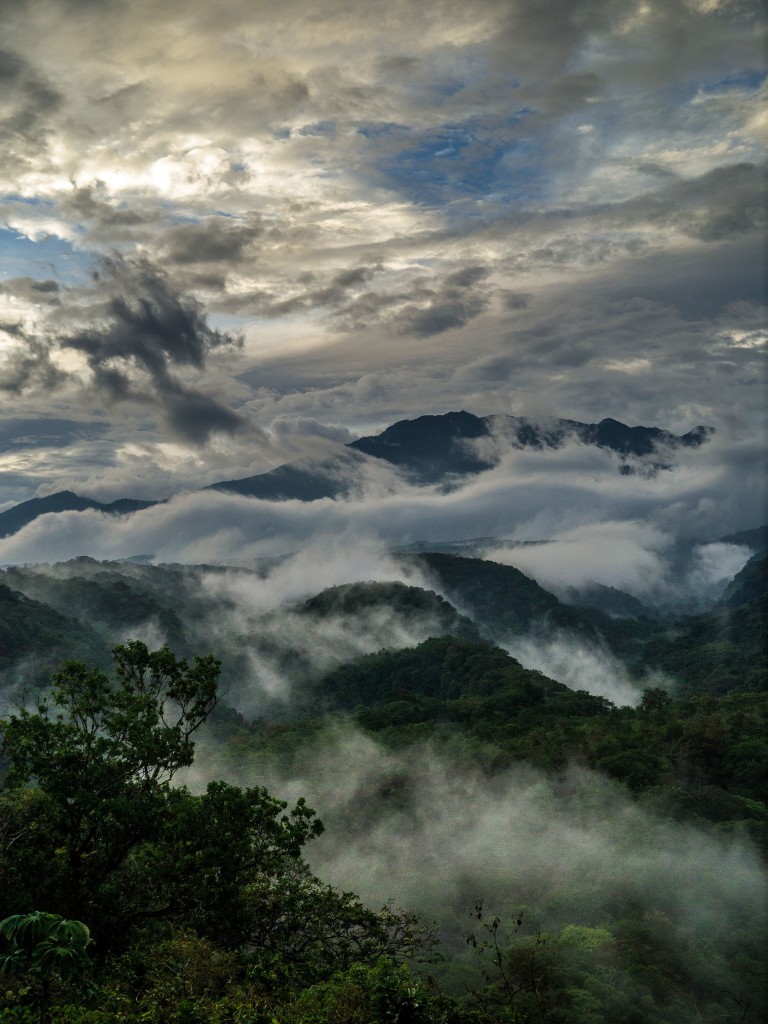
The much-lauded expat haven, otherwise known as Boquete, is tucked 1200 meters above sea level in the scenic Chiriqui Province. The Caldera River dissects this small town, nestled in its green mountain valley. Only 60 km from Costa Rica’s border and 45 minutes from hot and sultry David, Boquete enjoys a much more pleasant climate than that of the lowlands. Its scenic location, temperature, and natural environment make it extremely popular with expats, Panamanians and tourists from all over the world.

Boquete, the surrounding villages and communities are a series of mini microcosms. A beautiful sunny day in the nearby community of Volcancita, can be a much colder and wetter day in Boquete itself, especially when the bajareque–a very fine but wet mist, quite common at certain times of the year—rolls in. If you do encounter the bajareque do not despair, within a few minutes’ drive you should be able to find blue skies and gentle breezes. If considering living or buying here, be sure to ask the local community about the seasonal variations for your specific area of interest.
Boquete-13

Community

The Central Square or Plaza is a hub of activity as it is close to supermarkets, produce markets, restaurants and a great place to people watch.

There is a growing number of expats, primarily from North America with a mix of Europeans and South Americans thrown in too. The indigenous people are the Ngobe Bugle–the women & girls wear bright colourfully trimmed dresses in eye catching solid shades—some live in Boquete year round. Their numbers swell during the coffee berry-picking season, as they come in from the Comarca to add their deft fingers to harvesting. Farmers & fisherman ply their wares from the rears of beat up old jalopies. Literacy is high in Panama, some English is spoken, although Spanish is the official language and having at least the basics will be needed if you want to shop here.

Tourists, including those toting backpacks abound, attracted here by the hiking, the scenery and to climb Volcan Baru–the highest point in Panama–on a clear day, the view from the top includes both the Atlantic and the Pacific Oceans.

The Boquete Community Players (BCP) Community Center is  a major hub of activity, both for its exceedingly talented productions, its importance as a community meeting area and the Tuesday morning market, where visitors find fresh organic produce, spices, coffee, artisan and indigenous crafts, along with fresh made snacks and the second hand bookstore.

Boquete-12

Infrastructure

Boquete is solidly established with all the necessities a expat could need, banks, doctors, dentists, supermarkets, a wide range of restaurants ranging from those serving a hearty plate of comida tipica for a few dollars, to those serving world class cuisine at prices closer to those found in the states. Nearby David, has a private hospital, lawyers for obtaining your hubliado status and big box stores aplenty.

The water is classed as potable–although some people challenge that opinion–the delivery system is somewhat fragile and breaks in the line can allow contaminants to enter. Most homes have large storage tanks to offset the annoyances of what can be frequent shutoffs, especially during the construction of the new 4-lane highway connecting Boquete to David.

Rumours of international flights flying direct to David abound, it would make access easier and reduce costs—passengers currently have to fly into Panama City then travel across the city to the domestic airport to catch a flight to David–the runway extension is complete and patiently waiting to welcome international flights.

Activities

The only way anyone could be bored in Boquete is if they chose to lock themselves up at home!

Volunteer activities include the Rotary Club, the humane society, the centre for the disabled or the BCP (Boquete Community Players).

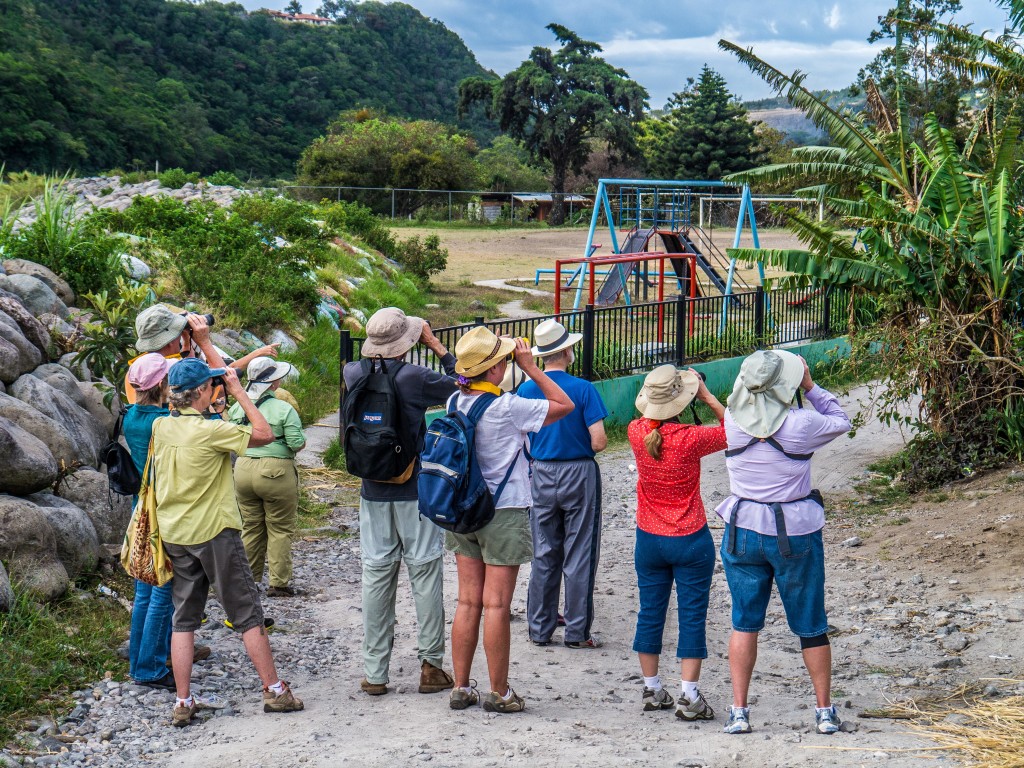
There are a multitude of other groups and activities in which to get involved–bird watching, photography, hiking, painting, yoga, tai chi, feldenkrais, cooking classes–and the very popular Habla Ya Spanish School.

The list is not complete without a visit to a coffee farm, zip lining, white water rafting and hiking the multitude of trails in search of Quetzals or stunning views.
Boquete-8

Beeronomics Index

A Balboa local beer in a restaurant is about $1.25

Case of 24 cold Balboa from a supermarket $9.50

Restaurant meals $2.75 to $16 and up

1 kg Boneless chicken breasts $4

Dozen Eggs $1.75

1 kg Tomatoes $2.00

5 Bananas $0.50

Boquete-16

Current Property Prices (October 2013)

Small basic house on 1.75 acre flat lot with development potential, price $60,000

Alto Boquete, 3 bed, 2 bath, 2,152.8 ft2   with Volcan Baru view, price $280,000El Alto Boquete, 2 bed, 1 bath, 1,205   sq. ft. Lot 4,843.76, views, price $95,000

Rentals

Volcancito 1 bed, 1 bath 650 sq. ft. fully furnished apartment, per month $550

Alto Lino 3 bed home, TV internet and maid included per month $1,000

Alto Boquete 3 bed, 3 bath, with views, per month $750
Boquete-17

What’s to love?

The community is what makes Boquete so special, expats and Panamanians alike are proud of their community and rightly so. Many expats although officially retired, are busier than they ever thought possible doing what pleases and interests them the most.

We especially loved the Tuesday market at the BCP followed by a visit to Sugar and Spice for fresh coffee, pastries and a wide range of bread to go.

There are comfortable temperatures year round, allowing residents to make the most of their outdoor living areas and enjoy the areas stunning views. Plentiful fresh produce is readily available, with a perfect climate to grow your own.

Low cost of living, allows a few extras such as a weekly maid $15, or a massage $20. Panama’s pensionado program makes life here even more affordable with discounts on meals, flights, hotels and medications for those that qualify.

What’s not to love?

Boquetes long popularity equates into higher property and commodity prices in the area. Property prices have been slowly correcting themselves with some motivated sellers now selling at below pre-boom prices. Living expenses remain higher here than other areas of inland Panama, however with those higher prices come the amenities that make Boquete so popular.

The Caldera River, although delightful to see and hear, floods regularly, be aware if considering buying or renting nearby. Although Boquete boasts spring like temperatures year round it does have both a wet and a dry season. Typically, strong northerly winds occur  during  the dry season–sometimes gusting with considerable force–as we discovered when the barbeque was blown off the patio.

The area as much of Central America does have a few species of poisonous snakes be aware when gardening or hiking. Note: In the 3 months we were there, we saw only one small snake.

Our Perfect Abode Checklist Comparison

A stable government and economy        √

Affordable properties with foreseeable appreciation   √

Sunny and warm climate   √

Friendly locals   √

Ease of obtaining residency or buying property   √

Affordability, total living costs have to be less than $2000 per month  √

A home with a view, either mountain, lake or ocean   √

Close enough to the ocean to fulfill our SCUBA urges    X

Prefer a small village or town rather than a big city     √

Readily available fresh produce and/or room to grow our own   √

Some expats nearby, especially in a non-English speaking country    √

A vibrant community spirit that we could be involved with    √

Boquete scores high on our checklist, however after spending a few months here we were craving the ocean. We are not yet convinced it is right for us.

How would this list compare to your own?

Note: We spent 10 weeks in Las Brisas a small community in Alto Boquete, 15 minutes from Boquete.

As always we recommend spending a minimum of a month, in anyone place. Unless you have already decided that, it is not for you. If you are planning on investing or re-locating there we recommend at least 6 months.


Useful contacts, links

Expat exchange site

Boquete Forum

Boquete weather guide


0 comments

Impressions of Placencia Belize

Placencia, Belize

Placencia is for those looking for that island vibe while still being on the mainland. The skinny peninsula stretches out and along the coast ending in the tiny fishing village of Placencia. It is so skinny that in some places you can see both the Caribbean Ocean and the lagoon lapping on either side.

The area boasts 16 miles of beach and at “4,071 feet long and 4 feet wide–according to the Guiness Book of World Records–the narrowest main street in the world”. The sidewalk was re surfaced and widened this year, so that record may not still stand.

The sidewalk is still the hub of activity, despite the fact that the village does now have a paved road all the way down to the newly constructed dock. A stroll along the sidewalk still rewards you with glimpses into gaily-painted homes, gardens awash with glorious color or bare expanses of sand, wood carvers, jewellery artisans, coffee shops, restaurants, beach side cabanas and souvenir shops.

You are also guaranteed to be greeted and welcomed by many of the locals, whether members of the local Garifuna, Mayan ladies selling their crafts, or the thriving population of local expats

Community

The wide mix of peoples and the multi-cultural tolerance displayed is what makes this community very special. The friendliness of the locals is why many tourists return repeatedly and eventually settle here, which is what, happened to our hosts at Captain Jaks

Volunteers can get involved with the local humane society, the local church communities, or the Rotary Club—unfortunately we did not receive a very warm welcome when we attended one bingo night session, which is why we did not go back–hopefully this was a unusual occurrence as Rotary Clubs do a lot of good in many projects throughout the world.

The biggest social scene is the bar scene, Sunday night is ring toss at Yoli’s and Saturday afternoon is the horse shoe contest at The Barefoot Beach Bar. Live music–featuring local bands and transplanted musicians from Canada and the States—plays throughout the week and Karaoke is a Sunday night favourite.

Infrastructure

The area is undergoing considerable development especially in the areas north of the village, this is causing rising real estate prices and the influx of expats is driving up commodity prices as well.

The village has 5 Chinese owned and run markets, prices are similar in all of them, the main differences are in size and cleanliness. The market across from the Atlantic Bank as you come into the village, is the newest and has a wider selection of goods.

There are 3 banks, hairdressers, spas, a plethora of restaurants and lots of rooms, unless you are visiting at peak times like Christmas and New Year, when availability goes down and prices go up.

Activities

Fishing, diving, snorkelling, sun worshipping, people watching and drinking are the main activities of this very popular vacation destination.

You can also rent a Kayak and explore nearby Placecnia Caye or head over to the lagoon side and explore the mangrove-fringed lagoon, where you may be lucky enough to spot Manatees.

Tours to Monkey River, the Jaguar Reserve or Belize Zoo are all popular destinations. Alternatively head north and explore Hopkins, Seine Bight or Dangriga. Our favourite trip was the short ride over to Independence on the Hokey Pokey, the water taxi that connects this little spit of land with the mainland and the nearest Immigration office.

Beeronomics Index  US$

  • A Belikin a local beer in a restaurant is about $2
  • Case of 24 Belikin from wholesaler $25
  • Restaurant meals $6 to $20 and up
  • 1 kg Boneless chicken breasts $8
  • Dozen Eggs $3
  • 1 kg Tomatoes $2.50
  •  5 Bananas $1

Current Property Prices US$ (October 2013)

  1. Caribbean Sea to Lagoon Combo Lots $225,000
  2. 2 bed 2.5 bath home in new beachside development $699,000
  3. 3,000 sq. f.t Beachfront Villa, on outskirts of Placencia Village $1,100,000 (this property was on the market when we first visited too)
  4. Apartment building in the village, (4 apartments) on sale for $299,000 in July 2013

Rentals

For anything, less than a month rental you are going to be paying vacation prices, which vary from $25 to $100 per night.

When we were there in November 2011, a small-furnished, one-bedroom apartment in the village was $600 a month. We met expats who were paying $800 for a charming wooden beach house, although these bargains are hard to find.

Current listings include:

  • One bedroom house on the lagoon $1250 per month
  • Three bedroom house at Maya Beach $2500

What’s to love?

The people, the beaches, fresh fish direct from the local fishermen, fresh lobster too if you are lucky. For fresh coconut water ask for Marlon and he will provide it by the gallon jug.

The ease of making new friends, even though we were only there for a few weeks on our first visit, we made many friends who were delighted to see us on our return. The people of Placecnia love a good party, we were fortunate enough to be there for Lobsterfest and had a blast!

Spotting pods of dolphins as they cut through the split between Placencia and Placencia Caye.

Early morning walks on the beach and the welcome sea breeze during the hotter, stickier months of July & August.

What’s not to love?

What makes Placencia so beautiful, the beach, the sea and the proximity of both is also what could be a concern for an investor. None of Placencia is more than a few feet above sea level meaning that big storms and high tides are a concern. Hurricane Iris hit Placencia on October 8th 2001 causing damage to 95% of the village’s buildings.

Prices have continued to rise since the developers rushed in and bought up large tracts in the hurricanes aftermath. Development continues north of the village and rumours abound over proposed Cruise Ship visits.

Our Perfect Abode Checklist Comparison

A stable government and economy        √

Affordable properties with foreseeable appreciation   √

Sunny and warm climate   √

Friendly locals   √

Ease of obtaining residency or buying property   √

Affordability, total living costs have to be less than $2000 per month   X

A home with a view, either mountain, lake or ocean    √

Close enough to the ocean to fulfill our SCUBA urges    √

Prefer a small village or town rather than a big city      √

Readily available fresh produce and/or room to grow our own   ?

Some expats nearby, especially in a non-English speaking country    √

A vibrant community spirit that we could be involved with    ?

Placenicia & Belize, score high on our checklist, however there is still a lot of the world to explore.

How would this list compare to your own?

Note: We spent all of November 2012 here and July & August of 2013—obviously we liked it here.

As always we recommend spending a minimum of a month, in anyone place. Unless you have already decided that, it is not for you. 

Useful contacts, links

Expat exchange site

http://www.belizespecialists.com/Placencia.htm

Placencia Classifieds on FB

0 comments
error: