≡ Menu

Your Escape Blueprint

12:21:12 the End of the Mayan Calendar

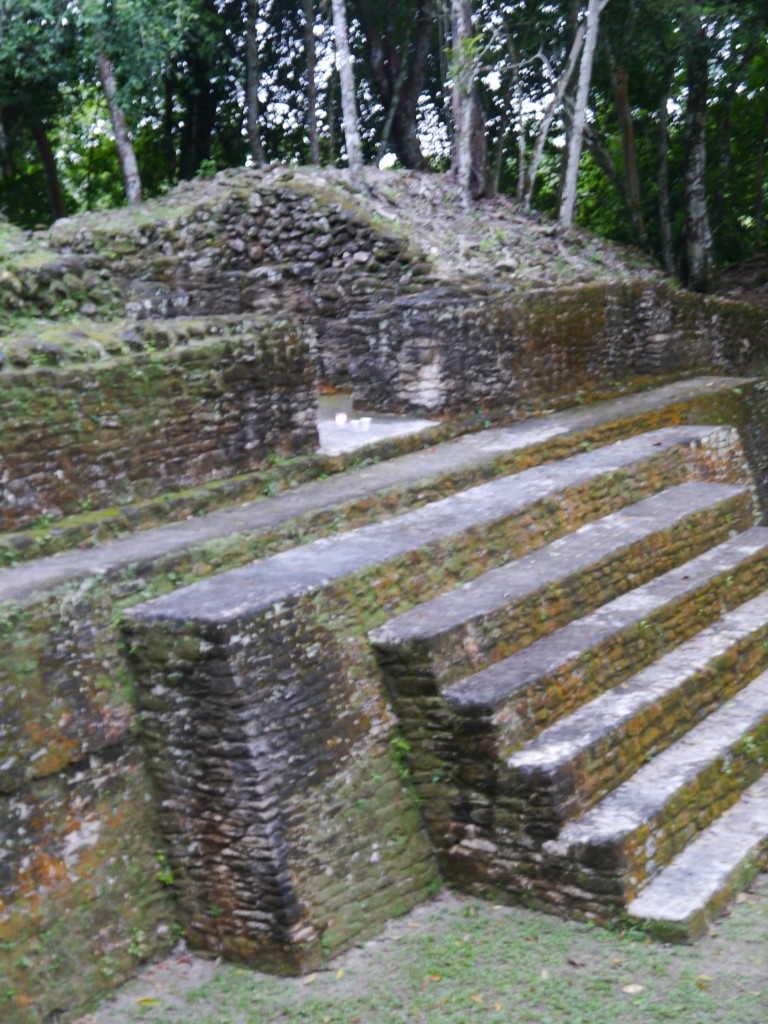
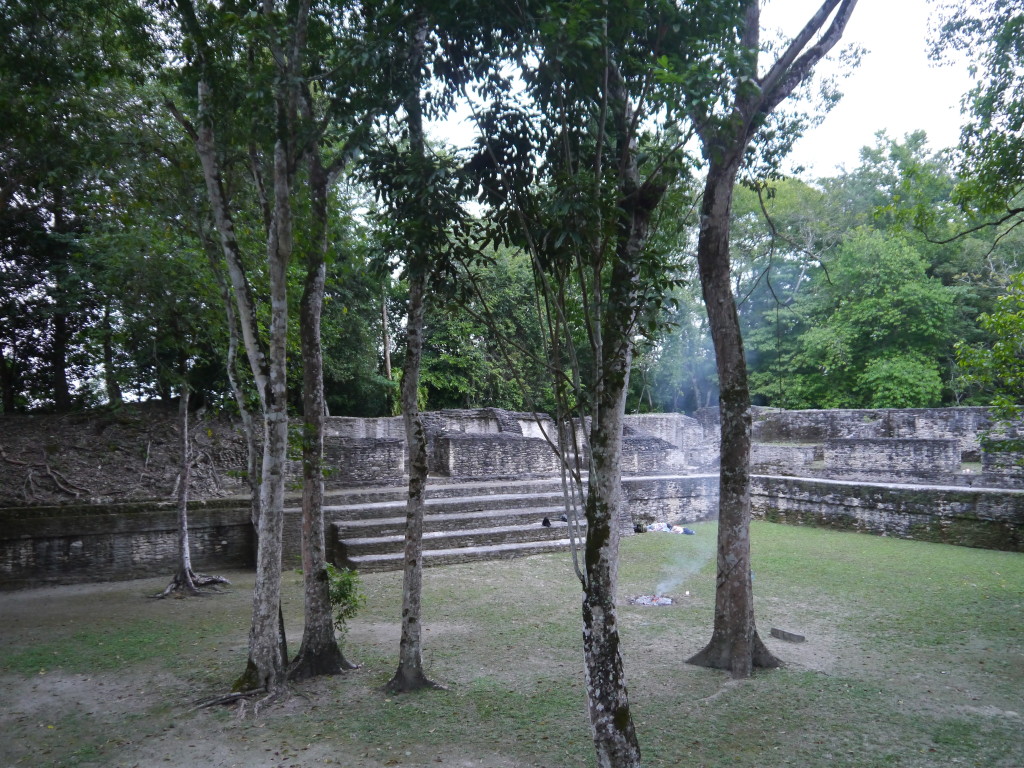
Having spent the last few months in Belize, where the descendants of the Maya still live. We soon came to realise that this is not considered an end, rather a new beginning just as the birth of a child is new life, new beginnings. Here in San Ignacio so close to several sacred sites we have had the opportunity to explore and soak in the atmosphere. In all of the places we have been to the feelings engendered are awe and reverence…… not fear of impending doom. This morning 21st December we rose before dawn to visit Cahal Pech once more, rumours had circulated about a special ceremony to greet the sun, just as the Mayans did at the height of their power. Many people had denied that anything was to take place! As we entered the grounds, we passed families leaving the site carrying pots, blankets and food. In the central plaza, the embers of a fire still glowed hot, candles burned on all four points of the compass. Peace and tranquility pervaded the air we breathed, the gentle breezes and the rays of the rising sun. We are thankful that the descendants of the Maya had this opportunity to perform their sacred ceremonies and to welcome in the new era. Without the disruptive influence of 100’s or 1000’s of spectators as at other sites! In Mayan tradition we gave our food offering to the fire along with a prayer for worldwide peace, joy and tolerance. It is difficult to put into words the profound calmness and reverence present in this place, much stronger today than anything felt before. A new cycle begins, what wondrous changes will we see in the years to come? May life continue to be Pura Vida! The Good Life…… for all.

P1130400 P1130380 P1130377


0 comments

ATM Cave of the Crystal Maiden, Belize

Actun Tunichil Muknal –The Cave of the Stone Sepulcher is one of the most thrilling caving experiences Belize has to offer. Actun Tunichil Muknal or the ATM–as it is more commonly known–is located in the Roaring Creek Valley near San Ignacio.

This is a sacred place to the Maya people especially during AD 250-909. The Mayas believed that gods, who provided rain and crop fertility, resided in this underworld. The rulers and high priests would enter this deep dark world to leave gifts of food, blood and even human sacrifices for the gods. This cave offers a unique chance to see earthenware vessels and human remains, left exactly as when archaeologists first explored the cave in 1993.

Visits to the cave are allowed only with a specially licensed tour guide from San Ignacio. It is an uneventful drive until the turn off onto a dirt road. The next 7 miles takes us through local villages, passing cows, pigs, chickens, bean and cornfields. Orange groves give way to stands of Teak and Mahogany plantations. We park up in the rustic picnic area–toilets were out of action when we were there, however, there are many trees around–construction of a toilet and changing room block was underway.

Our guide hands out our hats and we are off, shortly after we have wade Roaring Creek. This is when you realize that yes you do need closed toe footwear. Preferably a pair of trainers or boots that you don’t mind getting wet!!! Water shoes will do, but you will regret not having a better degree of protection. We follow our guide Lenny along a well-trodden trail alongside the river working our way upstream. We cross the creek twice more, each time followed by the local “Nibbler” fish, stand still long enough and they will nibble away any dead skin, even give you a pedicure if you were bare footed. After about 40 minutes, we reach the hourglass shaped entrance.

A hunter stumbled upon Actun Tunichil Muknal in 1989. Standing at the edge of the deep pool created by the outflowing Muknal stream, we peer into the darkness…………… I wonder what thoughts were going through that hunters mind as he stood here? Our guide hands out our lights, shows us how they operate and helps us to secure them to our helmets. This is when it sinks in, that yes we are going to go inside this sacred place, which also happens to be a cave system that stretches for 3 miles.

This adventure is not for the faint of heart and should be undertaken only with an experienced guide. Luckily for us Lenny our guide is a very experienced caver and has spent hours in this system. He explains that just inside the entrance, there will be some tight areas, which will open up into bigger chambers, we are to follow him and listen to instructions!


actun tunichil muknal cave entrance

To enter you have to swim. We clamber out onto a small embankment just inside the first chamber, switch our lights on and enter the underworld! We climb rocks, squeeze through passageways, and wade through water ankle to chest deep, avoiding the submerged rocks that can turn ankles or break toes! Our pace is slow and steady; the only sounds the splash of our path and the flutter of a few awakened bats.

Our guide points out some of the massive stalactites that hang in convoluted ribbons over our heads, some of them forming immense coral type heads. They sparkle with the calcite left behind from the steady drip of virgin water that has formed them. Elsewhere the ceiling and walls are ochre red or webbed with fine veins of calcite and golden sulphur. Our guide uses a secondary flashlight to point out items of special interest one of them is a “mock scorpion”, actually a spider which eats cave crickets! Not too sure, what they eat in this dark underworld?

cave coolness

We enter a wide curved passageway and Lenny tells us we have reached the Stelae Chamber. This is of major archaeological interest in this cave. High above our heads on a wide ledge sit two slate Stelae,

This is where those long dead high priests and rulers performed their rituals, this is where they cut themselves with obsidian blades to offer their blood to the gods. How did they enter the underworld? Did they swim in holding torches overhead or clamber through a lost passageway?

Shortly after, we reach our entry point to the main chamber, a huge boulder, which when shown how, is fairly easy to climb, a little further in and we remove our shoes, socks we keep as they offer a little protection for us and prevent our body oils from contaminating the surface. The chamber is vast, one of the biggest yet discovered, the floor is a series of convoluted ridges and swirls, broken here and there with large flat-topped rocks, columns and stalactites. We are told to walk only on the ridges, as the cavities contain fragments of pottery and bones, easily crushed by a misplaced foot!

There are earthenware pots everywhere…… placed in the walls, on flat stones, on the floor, nestled against the walls, some intact, some ritually killed, purposely broken to release the energy they contain. All of them would have contained a offering to the gods, they vary in size from a few inches to a couple of feet in diameter. Many of The pots scattered on the cave floor are crusted white from previous flooding’s. They sit as if waiting for the next visit of the high priests; glaze still glistens on some of them.

100_2238

Our guide pulls our attention to the somewhat more grisly artifacts that lie half-buried in the cave floor. A human skull gazes upwards, the skull has a distinctive flattened forehead–a common practice among the ancient Maya, achieved by binding a flat board across baby’s foreheads–Just below a slight elevated area, we find more skulls, nestling amidst a haphazard jumble of bones. Sacrificial victims washed down from their original resting places above perhaps.

The skeletal remains of 14 individuals have been identified here, where they willing sacrifices, did they willing come here to start their journey into the spirit world? Perhaps we will never know I do know that at least one of them was a child. It seems impossible to be this close to so much history; we walk within inches of bones and pots that have been here centuries. Some of these offerings have lain undisturbed for 1700 years.

Actun Tunichil Muknal has one more gift for us. To reach the Cave of the Stone Sepulcher we climb upwards, scrambling up boulders, until we reach the side of the chamber, propped against the wall is of all things an aluminum ladder. This is the only way to gain entry to what is possibly the caves greatest mystery, we squeeze through a tight passageway and enter a small chamber.

Sprawled on its back, arms and legs akimbo is a complete skeleton. The “crystal maiden” so named because of the sparkling calcite with which she is encrusted. The mystery is why she is here so much higher than other offerings, was she an offering or a accidental death? Archeologists now think that the skeleton may actually be that of a male, maybe the “crystal maiden” should be the “crystal prince”. Perhaps that is what he was? Did he descend to offer to the gods only to die lost and scared?

remains from a mayan sacrifice

The prince is not alone in this small chamber; just beside the entrance is a jumble of bones topped by a large skull. On closer inspection it is obvious that the dome of the skull is enlarged, scientists believe this may have been caused by illness or maybe a birth defect.

Sadly this skull displays why cameras are no longer allowed inside Actun Tunichil Muknal, a large rectangular shaped hole gapes, no doubt made by a dropped camera. No one has admitted to the act. Public access to this amazing place, may be curtailed and it is in considerable jeopardy. I feel very privileged to experience this sacred place, the awe of seeing these lofty chambers and to feel so close to these ancient people.

It is time to say farewell to our mystery maiden, we slowly work our way back down, don our shoes, climb back down that 8-foot boulder and stand once more in its sacred waters. Lenny leads us on a different path–ending up with us hooting and laughing as we penetrate narrowing clefts which lead into hidden passageways too narrow to swim and too deep to walk. We sit in water-filled chutes and shuffle our way down, then watch our 6ft guide squeeze through an impossibly small gap. If he can do it so can we!

All too soon, we spot the light of day! We emerge from the underworld, awed, exhilarated & very privileged.


2 comments

How to Skype from anywhere in the world.

When we started travelling in Europe we thought we would be using our unlocked cell phone and purchasing SIM cards as we go.

Easier said than done. Our first stop was in Calais France, all of the cell phone shops here would only sell their cell phones with a minimum one year contract. When we asked if there plan worked in other European Countries the answer was a resounding NON!

When we got to Italy, we did purchase a prepaid SIM card from Vodafone Italy for 20 euros. The first issue we had was all the menus on the phone were changed to Italian when the card was installed. The second issue was after one call to England and one call to Canada our 20 euros had disappeared. This was not going to work. There was also the annoyance of Vodafone texting us almost every other day in Italian.

This was the one and only SIM card we bought in Europe!

Once we got to our first house sit in Italy, we were able to use Skype for free video conferencing. This worked great, however it was difficult to call businesses without 800 numbers, or friends who do not use Skype.

The owners of our second house sit in Spain pointed out that with Skype credits you could call any phone number for pennies a minute. We bought $14 Canadian worth of credits in June 2012. We made calls all over the world and still had a couple of dollars left when we got back to Canada in October 2012.

Skype was working out smashingly baby! – as long as we had a decent internet connection.  We were able to communicate effectively with friends and family as well as conduct personal business effectively for a reasonable cost.  Of course calling by Skype can be a little hit and miss at the best of times.

Then we got to Belize  – Skype does not work here at all!

As it turns out Belize Telemedia Limited (BTL)  has a monopoly on Internet Service Provision in Belize. The first couple of times I tried to use Skype in Belize I could make a connection but the connection soon dropped or became gibberish. At first I thought it was due to the connection speed – but as it turns out BTL is effectively blocking Skype in Belize to force you to use their phone system.

Belize Telemedia Limited

Before I found out about this practice I actually went into a BTL office in Placencia to ask about purchasing a prepaid SIM card for my phone. The rate for calling the US and Canada was $0.50 per minute. Fortunately for me they did not have any SIM cards in the office and were not sure when they would arrive.

Shortly after this, I was discovered how to work around BTL. By installing a virtual private network (VPN) I could effectively move my IP address from Belize to the US (and many other countries depending on the service provider) and bypass the BTL blockade!

I also discovered that Belize is not alone when it comes to censoring Skype. Here is a partial list of countries that block Skype:

Bahrain, Belize, Brazil, many of the Caribbean nations, China, Columbia, Cuba, Egypt, Iran, Kuwait, Malaysia, Mexico, Morocco, Myanmar, South Korea, North Korea, Oman, Pakistan, Panama, Paraguay, Qatar,  Saudi Arabia, Syria, Thailand, Tunisia, Turkey, UAE, Vietnam and Yemen

I started my internet research into VPN service providers. There are many free VPN service providers available, however I was not getting a warm fuzzy feeling about  “free” VPN. When I started looking into the free services they either throttle the amount of data I could move, they had advertising pop ups, and / or they install spy or malware on your machine. Apparently there is no such thing as a free lunch.

I started to look at the fee for service providers and finally decided on Private Internet Access. They were well ranked and had good reviews. The price point was also appealing. I purchased the one year plan which works out to just over $3 per month.

The software was easy to install and works great, I am now able to Skype from anywhere in the world, including Belize.

There are many other advantages to using a VPN service when travelling – these will be covered in a later post.

Happy Skyping!

0 comments

Holy Crap my Eyes are Smoking!

I started wearing eye glasses to correct my short sightedness when I was 7 years old. Oh yeah! I have heard all the stupid childhood jokes about wearing glasses. The first day I produced my glasses at “show and tell”  was rather traumatic.

Thirty years ago I watched a documentary on TV about pioneering Russian corrective eye surgery. The procedure involved cutting the cornea off the patient, freezing the cornea then shaping it in a computer controlled milling machine. Once the cornea was the correct shape it was thawed out before sewing it back on the guinea pig – I mean patient. My reaction to watching this was ” I think I will wait and see if corrective eye surgery improves any before I give it a whirl!

Fast forward to January 25 th 2012, I was laying on my back on a gurney with the smell of  burnt hair filling the room as a laser  zapped my eyes! Holy Crap my Eyes are Smoking!

When we made the decision to travel full time again I made up my mind to get laser corrective surgery performed on my eyes.  I did not want to deal with glasses or contacts anymore. When scuba diving there was always the thought running in the back of my mind – what if my contacts blow out at 100 feet depth – wouldn’t be cool. I had spoken with my optometrist and he said I was a candidate for the surgery.

The are basically two types of corrective procedures available:

1. Lasik  where a thin flap of cornea is first created, with a sharp blade. The flap is then lifted and the underlying tissue is sculpted by the laser for the desired correction.  The flap is repositioned without sutures.

2. PRK (Photorefractive Keratectomy) First, the surgeon scrapes off the outer layer of the cornea (epithelium), and then the laser reshapes the cornea for the desired correction.   After the surgery, a soft contact lens is placed on the eye to act as a bandage for several days until the epithelium regrows.

Usually if you have a thin cornea PRK is performed, however the stronger the correction the more applicable the PRK is as well. My prescription was -6.75 and -7.00.

My optometrist gave me a few referrals to the best surgeons in town. When it comes to zapping my eyes with lasers I was not interested in the lowest bidder.

I decide to go to the Pacific Laser Eye Centre in Vancouver. I booked a free consultation.  I arrived at the clinic and was shown a video about the procedures, my eyes were then examined by a clinic optometrist. I was then given a  a personal consultation with Dr. Lin. This gentlemen is a pro. He asked me which procedure I was interested in. I told him my concerns with both. The concern with Lasik was the flap flapping around. My biggest concern with PRK was the potential for pain. I have friends who had PRK and were in agonizing pain for days after the surgery. I told the doctor – hey you are the expert what do you recommend?

Even though my corneas were nice and fat the doctor recommend that I was a good candidate for the PRK and borderline for Lasik.  With the amount of correction that I required meant that PRK was the way to go. If I went with the Lasik procedure and ever needed a second surgery it might not be possible where as PRK left more doors open.

Dr. Lin made sure I well understood the potential risks of the procedure which include:

  • Potential of Infection and delayed healing
  • Potential for under or over correction
  • Excessive corneal haze
  • Regression
  • Halo effect
  • Raised eye pressure (steroid induced gylcoma)
  • Equipment malfunction

Even if the procedure was 100% successful, because I was over 40 I might still need reading glasses because of age-related change in the lens, unrelated to laser eye surgery.

OK Fine – Make it so

I scheduled my appointment for three weeks later. Holy Crap am I doing the right thing? The voice in my head was really active What if? …. What if?……..What if?

Pre Operation

One of the things that really impressed me was that a  full pre-op examination was  conducted with my eye doctor. Checks and balances are important when zapping ones eyes with lasers!

I was also instructed not to wear contacts for one week prior to the procedure. Contact lenses tend to warp the cornea slightly. Time is needed for the cornea to resume its natural profile. I was also advised to start taking Omega -3 fish oil a week prior to surgery to assist with the healing process.

The Surgery Appointment –  Wednesday January 25th 2012

On the day of surgery, after I signed  my life away, and making a payment on the Doctor’s Porsche, another eye examination was done – just to make sure! This time the data was programmed into the computer controlling the laser.

I was led into a waiting room where the first of many gallons of eye drops were administered – they freeze your eyes before they “burn” them. I was  given an instructional video to watch and was instructed on how to self administer eye drops – this was very important in the weeks and months to come. I was also given a Gravol and an Ativan to help me chillax.

Once my eyeballs were sufficiently anesthetized, I was lead to the operating room and  positioned on the operating table. I has given a tension ball for each hand – visions of the western movies where the patient has to bite the bullet came to mind. The laser was moved into position. There is a green blinking fixation light which I was instructed to look at. The doctor did not say it but I as thinking If I screw up and don’t fix my gaze I would end up  looking like Hiedi the cross eyed possum. 

Dr. Lin put a few more gallons of eye drops in my eyes before installing an eyelid holder. Then Dr. continued scrap off  the epithelium (outer skin of my eye) with a spatula. My vision stared going blurry.

The doctor then started rubbing my eye – to polish it I understand. Then the fireworks began. The doctor was right behind me assuring me that the smell of burning hair was normal and nothing to worry about. Don’t worry we are only burning layers of your eye with a fricken laser nothing to be alarmed about!

The whole laser procedure took only a matter of seconds.

After the laser light show the doctor polished my eyeball, placed a bandage contact lens and it was one to the next eye.

After both eyes were finished smoking, I was escorted to the holding room were I sat in a comfy chair waiting for the councillor to debrief me. I was given a goodie bag of eye drops:

  1. Tobradex
  2. Ciprofloxacin
  3. Voltaren
  4. BBS saline solution
  5. Celluvisc

I was also given a prescription for Doxycycline , Tylenol 3 and Ativan – Hey I thought you said this was not going to hurt!

I was also given a styling pair of Roy Orbison wrap around sunglasses and was sent packing with explicit instruction to keep everything out of eyes especially my fingers. I was also to avoid getting any water in them. When taking a shower, keep your eyes tightly shut. Swimming pools and hot tubs – not gonna do it- for two weeks.

Yvonne was there to drive me home this was a good thing because I could see squat!

Before I was scheduled for surgery I was recommended that I take at least 4 or 5 days off work to recover – This turned out to be good advice.

Post Operation

Day 1 Post Operation Wednesday Jan 25 2012

Once I got home the first afternoon and evening was spent laying in bed applying a variable plethora  of drops into my newly shaped eyes.

My vision was very blurry it was looking through thick wavily glass – like the bottom of a bottle of Coke.

Day 2 Post Operation Thursday Jan 26 2012

The next day we went back to the clinic for a follow up,  more ophthalmologists peering into  my eyes. I was given even more drops.

Tobradex  1 drop 6 times a day for 2 days, then 2 drops a day for 1 day

Ciprofloxacin 1 drop 2 times a day for 3 days, then once a day until the bandage contacts come out.

Voltaren  1 drop 2 times a day for 1 day, then 1 drop the second day.

My vision was spotty it was constantly changing but definitely improving.

Day 3 Post Operation Friday Jan 27 2012

Vision was getting much better things were looking up!

Day 4 Post Operation Saturday Jan 28 2012

Up to today I had experienced very little pain or discomfort. That changed today – I guess because I had stopped taking the Trobradex and the Votren. My eyes felt like they had sand poured in them.

My vision also went for a dump as well – This is great my eyes are getting sore & I can’t see! I think something is wrong here!

Day 5 Post Operation Sunday Jan 29 2012

Pain has gone away my vision is still blurry.

Day 6 Post Operation  Monday Jan 30 2012

Today I went back to the Pacific Laser Eye Centre to have the contact lens bandages removed by Dr. Lin. The doctor was very pleased with the progress and said my healing was complete. My vision I was told will improve steadily over the next few days. Today was a drug free day for my eyes – tomorrow I start steroid drops.

My Eyes on Steroids

The steroid drops FML (fluorometholone)  are used to reduce the  possibility of haze or regression. These drops however may cause an increase in eye pressure drug-induced glaucoma

Another eye drop is prescribed to counteract the tendency to increase the intraocular pressure. This drug is Betopic S (betaxolol hydrochloride).

I am also continuing to take 2000 mg of omega -3 fish oil twice a day of for a month after surgery to asset with the healing process – To help me see like a fish?

The steroid regime I will be on is a 9 week program and looks like this:

Starting Tuesday January 31 2012

Ending Tuesday April 9 2012

Steroid (FML)

1 drop 4 times a day for 2 weeks

1 drop 3 times a day for 2 weeks

1 drop 2 times a day for 2 weeks

1 drop once a day for 2 weeks

1 drop every 2nd day for 1 week

Betopic

1 drop 2 times a day for 6 weeks

1 drop once a day for 1 week

Day 8 Post Operation February 1 2012 

Still off work and my vision is definitely improving today. As the day wore on the fuzziness started to creep back into my vision.

Still not able to drive. Will not be able to drive until I get clearance from my eye doctor.

Day 10 Post Operation February 3 rd 2012

First day back to work my vision is improving every day. Working at the computer is very difficult. My vision is good in the morning but I suffer from eye strain as the day goes on.

Day 11 Post Operation February 4 th 2012

Did a 1 1/2 hour stretch on the computer today and I am paying for it. I am feeling the effects of eye strain. Things are still blurry but I can see the light at the end of the tunnel

Post Operation Visits with my Optometrist

Pacific Laser Eye Centre set up a co management arrangement with my Optometrist in Coquitlam Dr Alan Nicholson at the Austin Heights Optometry Clinic for the on going monitoring of my eyes.These visits are important especially during the steroid regime after PRK  to see whether the steroid drops are causing an increase in eye pressure

First optometrist visit Post Operation Day   Monday February 6th  2012

Dr Nicholson indicates that my corneas are slightly pitted and it will take some time for them to heal completely. When the epithelium becomes smooth (optical grade) I will have 20/20 vision!

I was given clearance to drive today!

Day 14 Post Operation  February 8th 2012

My eyes are coming around and my vision is AWESOME! It is an amazing feeling after almost 40 years of wearing glasses to be able to see the alarm clock in the morning with out fumbling around for your glasses. You can get up in the morning and just get on with it.

March 3 2012  – 1 month Post Operation 

My vision is AWESOME!

Six Month Post Operation visit with Dr Nicholson

My eyes are fine, I have a slight regression in one eye of -0.5. This does not mean I require glasses and usually any regression occurs with in the first six months. The bottom line is that my vision is perfectly fine to function normally with out glasses or contact lenses.

I still go to bed sometimes thinking “Oh crap I forgot to take out my contacts!” Then I think “nope I don’t have to do that any more!”

Conclusion:

I have absolutely no regrets with the results of my PRK procedure. I am glad I waited to have Dr. Lin do my procedure rather than going for the Russian procedure of 30 years ago.

Life without glasses or contacts is absolutely fabulous!
0 comments

Beautiful but deadly

I have long been fascinated by the beautiful “Lionfish” it poses defiantly on coral heads and barrel sponges alike. Beautiful because of its striking display of fins and banded colours. As in many of nature’s creatures this bold display is a warning sign! Those fins contain poisonous spines, not serious enough to kill a human but enough to cause agony in the afflicted limb for hour’s even days. This also means that the usual reef predators such as Moray eels and large Groupers leave them alone.

Therein lays a big problem!

Lionfish are not native to the Caribbean…….. it is believed that the first Lionfish were accidentally released from an aquarium in Biscayne Bay, Florida after Hurricane Andrew hit in 1992. Genetic research shows that the entire Atlantic and Caribbean population are the offspring of only six individuals!!!!! They reproduce at an alarming rate producing up to 2,000 eggs every few weeks.

Although they are a very pretty addition to the reefs they are voracious predators! Surveys have found that a single lionfish in a reef system can reduce the juvenile fish population by 79 % in just a few weeks! Less juvenile fish, less big fish………….

On a recent dive the Divemaster had asked if we were OK with him killing the ones he found. I usually abhor the use of spear guns or any captures; after all I want to see a healthy well populated reef. Having heard of the invasion I had no problem giving my blessing.

The tool of choice is a “Hawaiian Sling” a stick with 3 sharp points on one end with a elastic loop on the other, it works on the same principle as a bow and arrow. The Lionfish are easy targets as they know no fear. The plan was to capture one or two and feed them to the morays; once the morays see them as a food source they will have at least one predator. Unfortunately we saw lots of Lionfish and no Morays.

Option two is death by dinner plate!

Remember these invaders have big, nasty, poisonous spines, once speared they have to be delicately transferred to a net, which of course soon become’s a prickly problem with multiple spines sticking out! At the end of each dive the net was passed into the boat first and stowed safely away.

Our lunch break finished with an anatomy lesson, as the crew skillfully removed the poisonous spines, filleted the white firm flesh and exposed the egg sacs and the half-digested juvenile fish; we found four victims in one stomach.

All across the Caribbean the battle is being fought, in Placencia they have a “Lionfish Tournament” teams of six, doing 3 dives in the day, compare their tally’s, the winning team gathered almost 300 in one day!

Lionfish happen to be very tasty eating, which is a darned good thing because their only real predator is us! Man has tinkered with natures balance once again, looks like it is up to us to help restore it, so go on eat Lionfish!

For more information check this out

0 comments

On my bucket list ……. Hammerhead Shark!

Up to now there has been one species on my wish list that has always eluded me….. the Hammerhead Shark! I can now tick it off my list as we saw a solitary seven footer disappearing into the blue as we started our first dive off South Water Caye, Belize. I was so surprised that I had to get confirmation from my fellow divers that it was in fact the Hammerhead and not a trick of the light.

Hammerhead sharks acquire their name from the unusual shape of their head which is flattened forming two lobes which extend out to either side, making a very distinctive silhouette. Their favourite food is stingrays and the females hatch their eggs inside the uterus, thereby giving birth to live young, which is fairly unusual in the shark world.

Sadly of the nine species found worldwide two of them are now classed as endangered due to sharply declining populations these are the Scalloped Hammerhead (Sphyrna lewini) and the Great Hammerhead (Sphyrna mokarran). Like all sharks they get a bad rap as being dangerous to humans, reality is that only one of these species the Great Hammerhead is considered dangerous to humans because of its aggressive behaviour and large size.

Around one hundred shark attacks are reported globally per year, of those approximately seventeen are fatalities, most shark attacks are cases of mistaken identity in that the human is in a area where sharks feed and looks like food…… a wet suit clad surfer looks very much like a seal from below. Despite their relative rarity, many people fear shark attacks after films such as the Jaws series. The creator of the Jaws phenomenon, Peter Benchley attempted, unsuccessfully to dispel the myth of sharks being man-eating monsters in the years before his death.

I feel extremely honored to have seen one of these rare creatures, I have seen many sharks during my 22 years of diving, even been on a couple of “Shark feeding” dives and have never felt threatened. Truth is they have more to fear from us! It is estimated that over 70 Million sharks are slaughtered each year to feed the Shark Fin industry! That is twice the population of Canada folks!

I might also mention that I did multiple dives in the South Water Caye area twenty years ago when I volunteered with Coral Cay Conservation, I saw lots of sharks but no Hammerheads. This time we did three dives and saw only the one shark………….

I see for myself every time I dive how few of these majestic creatures are left, we as humans are upsetting a balance that has been in place for millennium. All for a piece of cartilage, with no nutritional value or taste………. It is of course the primary ingredient in that expensive prized “delicacy” Shark Fin Soup. Please do the world a favour and say no!

0 comments

Close Encounters with Belize Wildlife

Have you ever had one of those “just stop moments”? Where nothing else matters except what you see and feel right now! We had one of those this morning………….

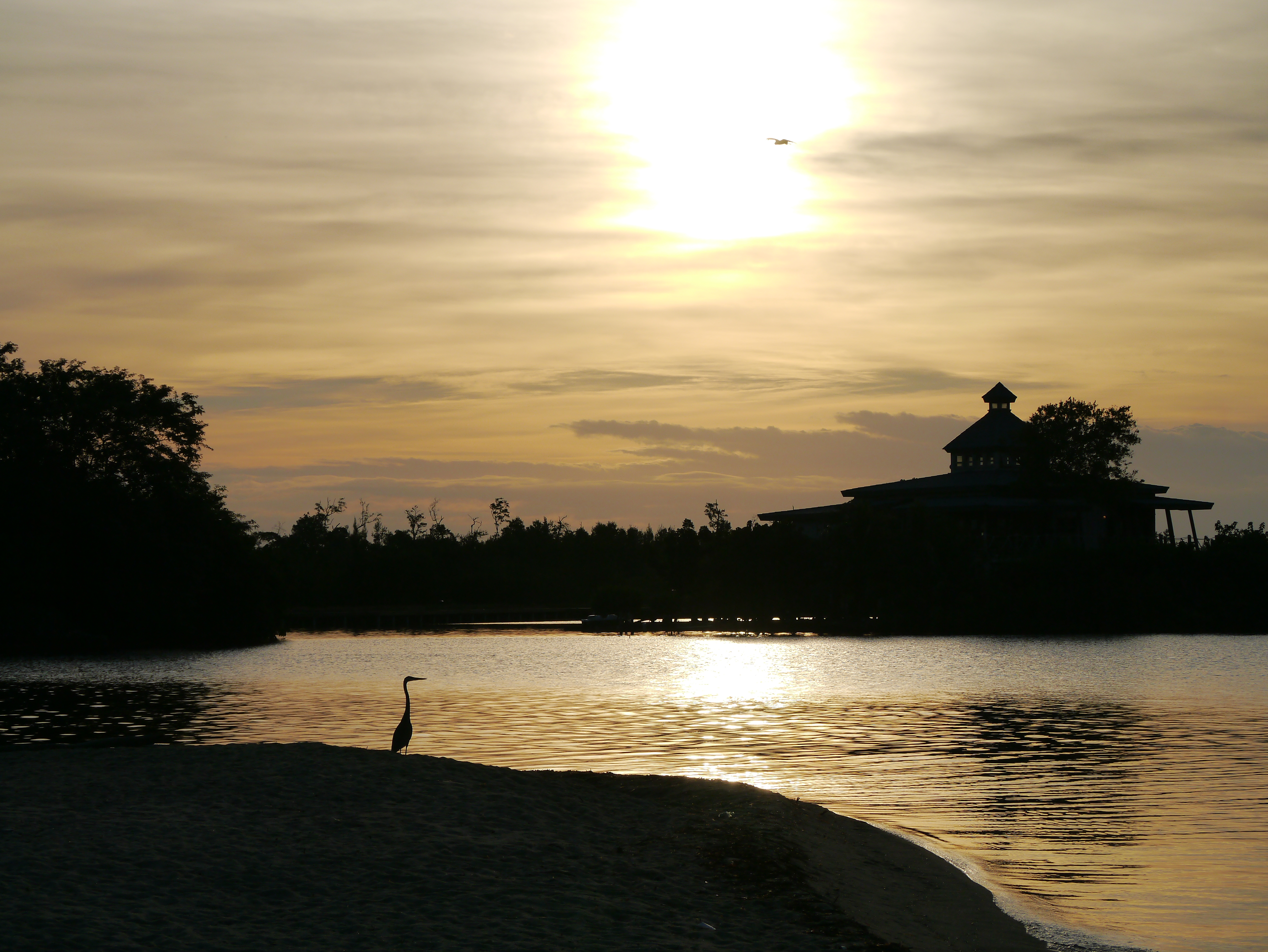
Sunrise is at 5.30 am, shortly after we were at our favourite fishing spot, which just happens to be at the southernmost tip of Placencia and just offshore of Placencia Caye. This is a natural deep channel between the Caribbean Sea and the lagoon and is well travelled by fisherman and boaters.

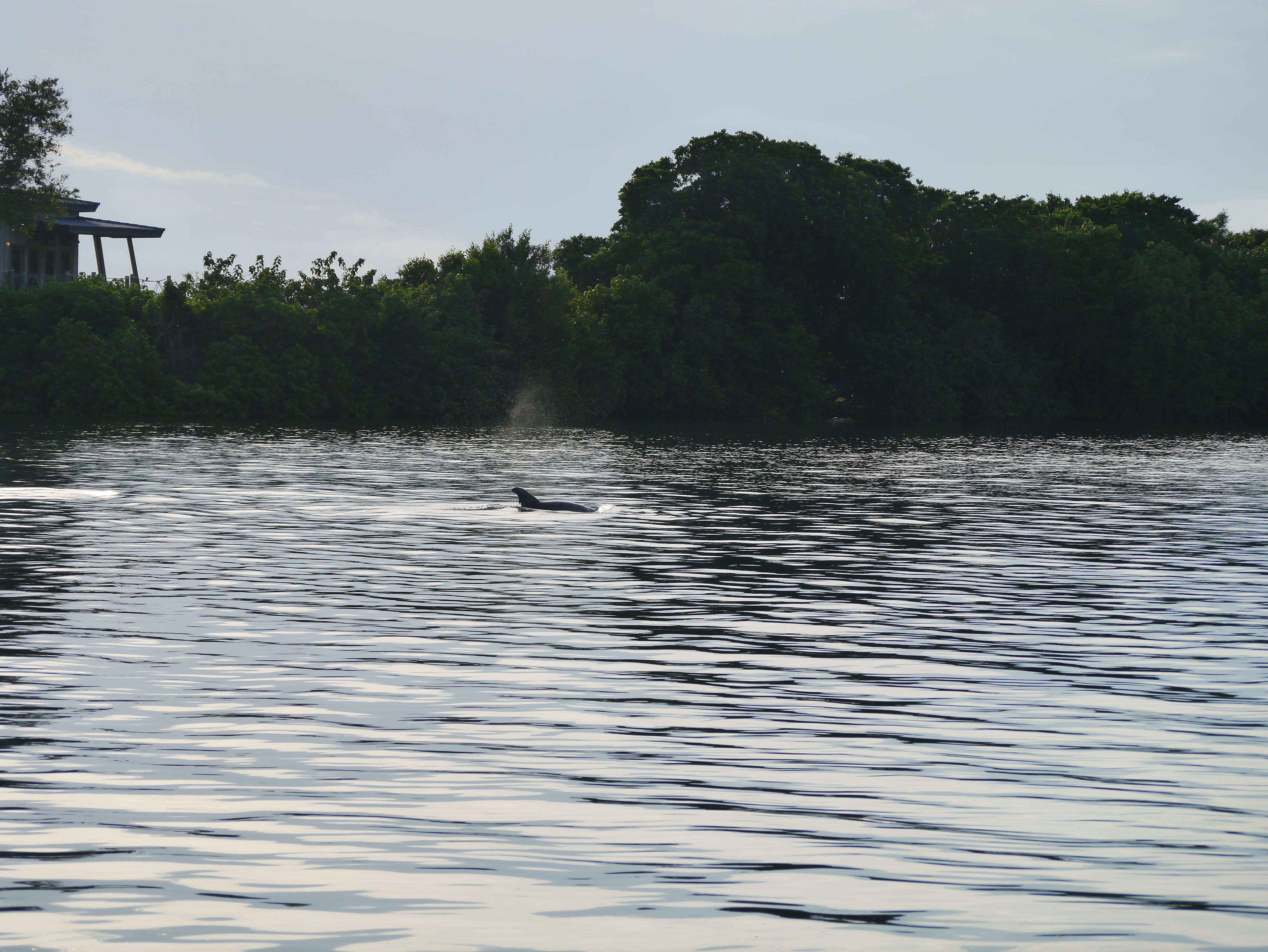
Toes lapped by the tiniest waves, my bait and line disturb the mirrored surface, the only sound is a few late crickets. ……… From the mercury still sea breaks a single dark fin, followed by the curve of a back, then another……….. the ripples disappear as do the fins, where are they? There!!!! They break the surface right in front of us, two, no three sets of fins, three curved backs, they break again this time we see the head…… are they watching us as closely as we are watching them?

They disappear from site, diving deep to navigate the channel perhaps or did they return out to sea? I hold my breath, still no fins………… there they are, through the channel into the lagoon side where the fishing appeared to be good, for them anyway. We watched as they breached, played and eventually disappeared from sight.

No matter how many times I am privileged to see these wonderful mammals, I will never tire of them. Dolphin encounters like these are as nature intended, a far cry from the intimacy that man forces upon them within the closed confines of their man made cages. To see this, to be in the right place to see these things is almost as if I have been released from one of those concrete pens. Life is about our experiences, not what we earn or who we know.

These are the moments that I will cherish and it these that I will remember in my final hours….. what will you remember?

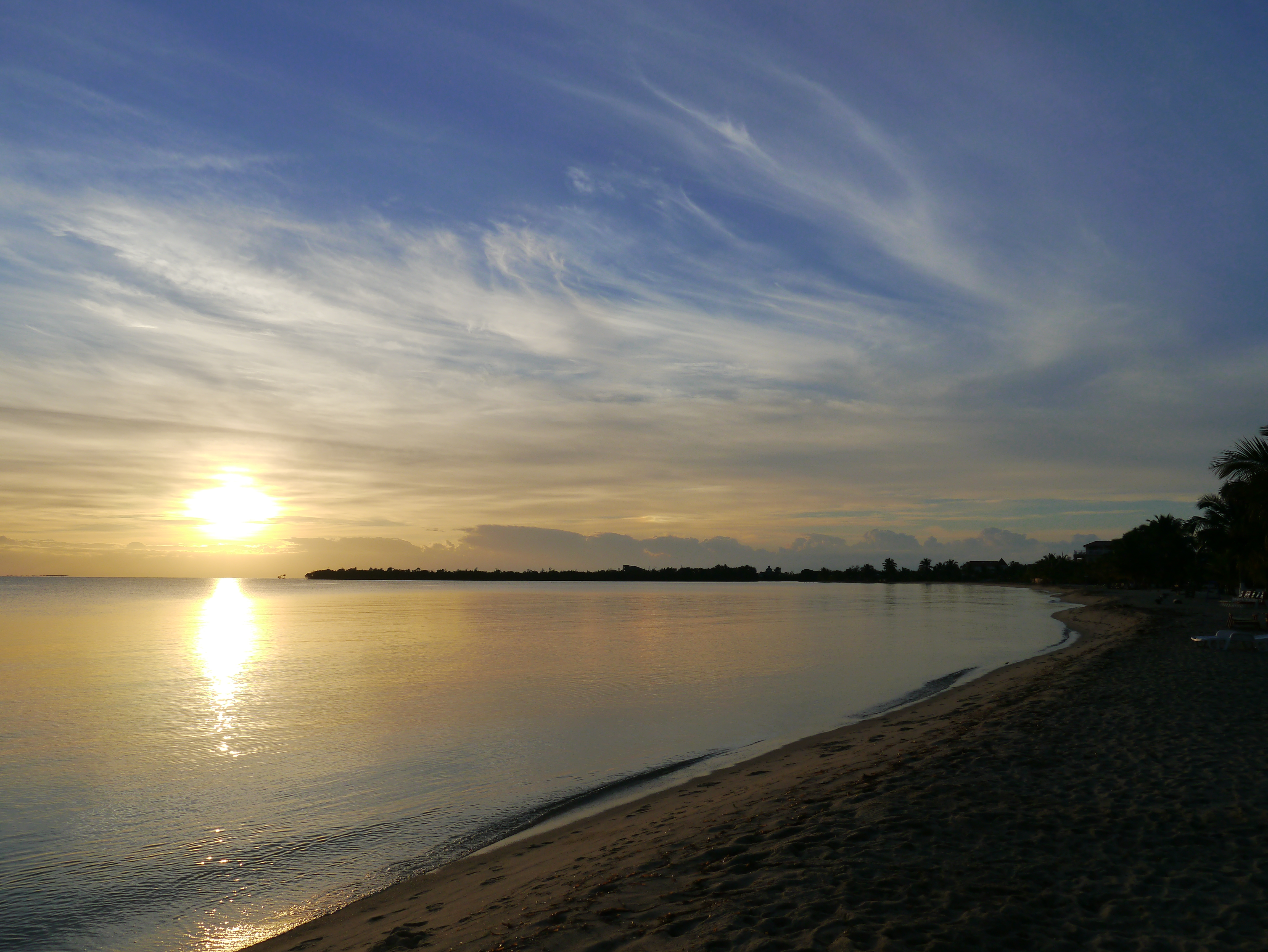
A beautiful morning in placencia belize

0 comments
error: